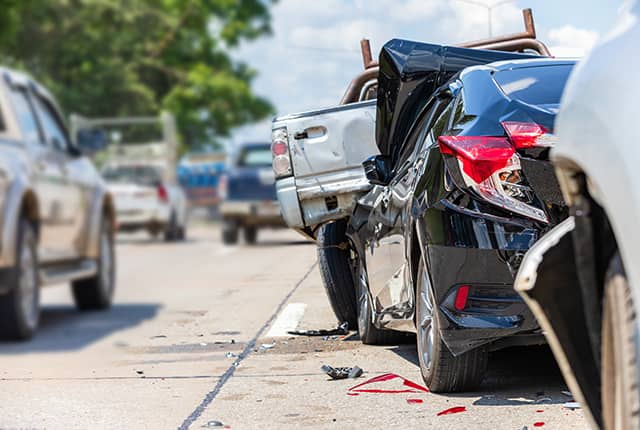
Most people have heard that the driver in back is always at fault in a rear-end collision. Insurance companies repeat it. Drivers assume it. Even some police officers treat it like an automatic rule.
But here’s the truth: Georgia law does not say that the rear driver is always responsible.
In many cases, the driver in front may share fault — or be entirely at fault — for causing the crash.
Rear-end accidents are more complicated than people realize. And if you’ve been blamed for one, understanding how fault really works can make all the difference in your case.
Why Rear-End Crashes Are Usually Blamed on the Rear Driver
There’s a reason the assumption exists. Most rear-end collisions happen because the back driver:
- was following too closely
- was distracted
- failed to stop in time
- or was driving too fast for the conditions
So naturally, insurance companies default to blaming the driver in back. But fault isn’t determined by assumptions — it’s determined by facts and evidence. And in many rear-end crashes, the front driver plays a major role.
When the Front Driver May Be at Fault
Here are some common situations where the front driver may share or carry full responsibility:
1. Sudden, unnecessary braking (“brake-checking”)
If a driver slams on their brakes aggressively or without reason, they can trigger a collision they caused — even if you’re behind them.
2. Stopping in live traffic without hazard lights
A front driver who stops suddenly for no reason, or stops in an active lane, can create a dangerous situation.
3. Cutting across lanes and stopping immediately
This is especially common near exits and intersections. If a driver cuts in front of you and brakes, they may be responsible.
4. Broken or non-functioning brake lights
If the driver in front doesn’t have working brake lights, the rear driver may not have enough warning to slow down.
5. Reversing unexpectedly
Sometimes drivers accidentally shift into reverse at stoplights or during parking maneuvers. If they hit you while backing up, that’s on them — not you.
6. Disabled vehicle left in the roadway
If a driver stops in a lane instead of pulling over safely, they may be responsible for a resulting accident.
These are all situations where the front driver’s negligence is the real cause of the crash — and evidence can prove it.
Chain-Reaction Crashes: Even More Complicated
Rear-end collisions involving three or more vehicles can be even harder to sort out.
In a chain-reaction crash, fault may fall on:
- the driver who caused the first impact
- a driver following too closely
- a driver who stopped abruptly
- or multiple drivers who share responsibility
These cases usually require a deeper investigation — including video footage, black box data, and expert analysis — to understand what actually happened.
The Evidence That Proves Fault
Insurance companies rely heavily on assumptions. We rely on evidence.
Key evidence in rear-end collisions includes:
- traffic and security camera footage
- dashcam video
- vehicle damage patterns
- the “black box” event data recorder
- witness statements
- 911 recordings and dispatch logs
- photos of the roadway and debris
This evidence can show braking patterns, speed, point of impact, and the behavior of the front driver — all crucial details in proving who is actually at fault.
How Georgia’s Negligence Laws Apply
Georgia follows a modified comparative negligence rule.
Here’s what that means:
- You can recover damages as long as you are less than 50% at fault.
- Your compensation is reduced by your percentage of fault.
So if the insurance company tries to assign you 100% responsibility just because you were in the back, they’re oversimplifying the law — and hoping you don’t fight it.
What to Do After a Rear-End Collision
To protect yourself, here’s what you should and shouldn’t do:
Do:
- Call the police and get a report
- Take photos of both vehicles and the road
- Get names and numbers of witnesses
- Seek medical attention as soon as possible
Don’t:
- Apologize or admit fault
- Give a recorded statement to the insurance company
- Assume responsibility because you were behind the other car
- Post anything about the accident on social media
You may not realize it in the moment, but these steps can determine whether you’re treated fairly later.
How Sawyer Injury Law Can Help
Proving fault in a rear-end collision requires more than assumptions — it requires a thorough investigation.
At Sawyer Injury Law, we:
- investigate independently
- gather and preserve evidence
- challenge false or unfair fault claims
- deal with the insurance company for you
- negotiate for the compensation you deserve
- and take your case to court when necessary
If you’ve been rear-ended — or accused of being at fault in a rear-end accident — you don’t have to handle it alone. We’re here to help you understand your rights and protect your case from the start.